PUZZLEMASTER
Official Encyclopedia
Puzzle Master Encyclopedia & Official Guide
Your Own High-Quality Jigsaw Puzzle Service
History of Jigsaw Puzzles
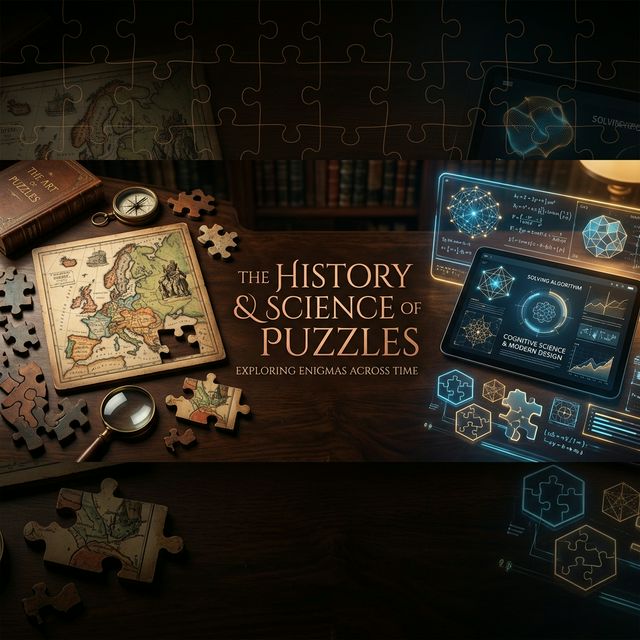
The history of jigsaw puzzles dates back to the 1760s when John Spilsbury, a British cartographer, cut a wooden map along national boundaries. Initially used for education, they evolved into complex recreational puzzles in the early 20th century. Puzzle Master combines this traditional aesthetic with modern digital technology.
Key Strategies for Success
1. Solve Borders First: Start with pieces that have a flat edge to build the frame.
2. Classify by Color and Pattern: Group similar colors to focus on specific areas.
3. Focus on Shape: Observe tabs and blanks carefully when colors are similar.
4. Take a Step Back: Rest your eyes and view the whole image if you get stuck.
2. Classify by Color and Pattern: Group similar colors to focus on specific areas.
3. Focus on Shape: Observe tabs and blanks carefully when colors are similar.
4. Take a Step Back: Rest your eyes and view the whole image if you get stuck.
Tool for Brain Health & Dementia Prevention
Solving puzzles stimulates multiple brain areas: visual for image analysis, short-term memory for piece locations, and motor for fitting pieces. This helps maintain cognitive health and is recommended for all ages.
Anxiety Relief & Emotional Stability
Entering the 'Flow' state while puzzling lowers heart rate and alleviates anxiety, similar to meditation. The small achievements of solving pieces improve self-esteem and help overcome burnout.
Digital Age: Why Puzzles Again?
In an era of information overload, Puzzle Master offers 'Digital Detox' time focusing on a single goal. Puzzling activates both brain hemispheres and promotes dopamine release, helping with stress relief and cognitive improvement.
Who is Puzzle Master for?
- Students and workers needing **brain stimulation and focus**
- Anyone needing **healing** from daily stress
- Those wishing to keep **precious memories** (family, pets) in a special way
- Seniors caring for **cognitive health**
- Anyone who knows the **pure joy** of completion.
- Anyone needing **healing** from daily stress
- Those wishing to keep **precious memories** (family, pets) in a special way
- Seniors caring for **cognitive health**
- Anyone who knows the **pure joy** of completion.